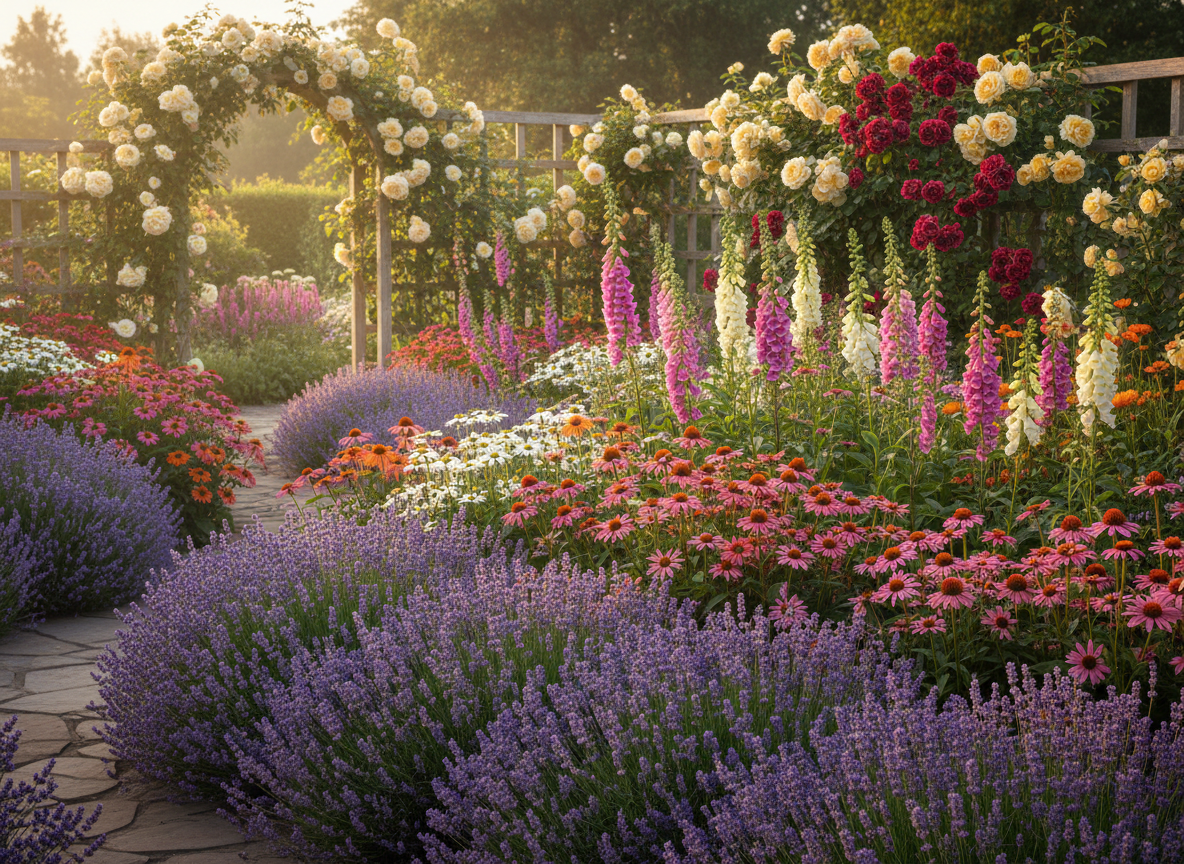
A beautiful cottage garden looks effortless, but the secret is choosing plants that naturally create layers of color, texture, height, and movement. If you are just getting started, you do not need dozens of rare varieties or a complicated planting plan. A thoughtfully chosen mix of reliable flowers and foliage can give you that relaxed, romantic cottage-garden feeling without making the garden difficult to manage.
This beginner-friendly list focuses on plants that are especially useful for creating full borders, soft edges, pollinator activity, and a long season of interest. Growing conditions vary by climate, so always check the light, soil, water needs, and local hardiness guidance for your area before planting.
If you are still planning the overall shape of your garden, start with our beginner’s guide to starting a cottage garden, then come back here to choose the plants that will bring it to life.

What Makes a Good Cottage Garden Plant?
The best cottage garden plants tend to do at least one of four things well: flower generously, soften hard edges, add vertical height, or weave naturally between neighboring plants. You do not need perfect symmetry. In fact, cottage gardens usually look best when plants overlap slightly and the borders feel abundant rather than rigid.
- Choose a mixture of tall, medium, and low-growing plants.
- Combine long-flowering plants with a few dramatic seasonal stars.
- Repeat a few favorite colors or plants throughout the border for cohesion.
- Include pollinator-friendly flowers whenever possible.
- Match every plant to your actual sun, soil, and moisture conditions.
15 Best Cottage Garden Plants for Beginners
1. Lavender
Lavender is one of the easiest ways to introduce fragrance, soft purple color, and a classic cottage-garden mood. It works beautifully along paths, near seating areas, and toward the front of sunny borders. Give it excellent drainage and plenty of sun; wet, heavy soil is usually a bigger problem than dry conditions.
2. Shrub and Climbing Roses
Roses bring romance and structure to a cottage garden. Shrub roses can anchor a border, while climbers can soften fences, arches, and walls. Beginners may find repeat-flowering, disease-resistant varieties easier to care for than older, fussier types. Give roses good airflow, adequate sun, and consistent watering while they establish.
3. Foxgloves
Foxgloves create the tall flower spires that make cottage borders feel layered and magical. They are especially useful toward the middle or back of a planting bed. Many foxgloves are biennial or short-lived perennial plants and may self-seed where conditions suit them. Note that foxglove is toxic if ingested, so place it thoughtfully around children and pets.
4. Hollyhocks
Few flowers look more at home beside a cottage wall or fence than hollyhocks. Their tall stems add vertical drama without taking up much ground space. Plant them where they can rise behind shorter flowers, and give them good airflow because the foliage can be prone to rust in humid conditions.
5. Delphiniums
Delphiniums provide spectacular blue, violet, pink, or white flower spikes. They create instant height and look especially striking among roses and softer mounding plants. They perform best where summers are not excessively hot, and taller varieties may need support in windy locations.

6. Coneflowers (Echinacea)
Coneflowers are a practical choice for gardeners who want generous summer color with relatively simple care. They tolerate heat well once established, attract pollinators, and pair beautifully with grasses and other relaxed cottage-style flowers. The seed heads can also provide winter texture if left standing.
7. Catmint (Nepeta)
Catmint forms soft clouds of gray-green foliage and blue-purple flowers. It is excellent for edging paths, spilling around roses, and filling gaps at the front of a sunny border. Many varieties are long-flowering and drought tolerant once established, making them especially useful for beginners.
8. Salvia
Perennial salvias add upright flower spikes and help keep a cottage border from looking too flat. Their purple, blue, pink, or white flowers attract bees and combine easily with roses, catmint, and daisies. Many types appreciate sun and well-drained soil and can flower again after trimming.
9. Hardy Geraniums
Hardy geraniums, often called cranesbills, are wonderful gap-fillers. Their mounding foliage softens the edges of borders and helps knit taller plants together. Depending on variety, they can handle sun or partial shade and often flower for a long period with minimal fuss.
10. Garden Phlox
Garden phlox produces generous clusters of flowers in summer and fits naturally into the middle of a cottage border. It adds height without becoming overwhelmingly tall, and many varieties are fragrant. Good airflow and choosing mildew-resistant varieties can make care easier.

11. Shasta Daisies
Shasta daisies bring crisp white flowers and sunny yellow centers to mixed borders. Their simple shape helps balance more elaborate roses and spires. They are easy to combine with almost any color palette and are especially effective when planted in small groups rather than as isolated single plants.
12. Yarrow (Achillea)
Yarrow is useful for sunny, relatively dry areas where more demanding plants may struggle. Its flat flower clusters add a different shape to the border and attract beneficial insects. Colors range from soft cream and yellow to pink, peach, and red, so it can fit many cottage-garden palettes.
13. Coreopsis
Coreopsis is cheerful, long-flowering, and generally uncomplicated. Many varieties produce yellow or golden daisy-like flowers for weeks, making them useful for adding brightness between larger cottage-garden plants. They typically prefer good sun and reasonably well-drained soil.
14. Cosmos
Cosmos is an annual rather than a perennial, but it deserves a place in a beginner cottage garden because it is easy to grow from seed in many climates and quickly creates that airy, informal look. Its delicate foliage and pink, white, or burgundy flowers weave beautifully between sturdier plants.
15. Sweet Peas
Sweet peas are classic cottage-garden climbers loved for their fragrance and soft flowers. Train them up a small trellis, obelisk, or fence to add vertical interest without needing much bed space. Their preferred sowing season varies by climate, so follow local guidance for the best flowering period.

An Easy Beginner Planting Formula
If choosing 15 plants feels overwhelming, start with just five types and repeat them throughout your border. For example:
- Back of border: hollyhocks or foxgloves
- Middle: roses and garden phlox
- Front: lavender or catmint
- Gap fillers: hardy geraniums
- Seasonal softness: cosmos
Repeating a limited plant palette usually creates a more cohesive garden than buying one of everything. Use our cottage garden color schemes to plan your flower color palette before adding new plants. Once the first planting is established, you can gradually add new varieties and seasonal accents.
How to Make Your Cottage Garden Easier to Maintain
- Group plants with similar water and light needs together.
- Leave enough room for mature plants even if the border looks sparse at first.
- Mulch bare soil to reduce weeds and help retain moisture.
- Deadhead selectively to extend flowering, while leaving some seed heads for wildlife and winter interest.
- Use a few dependable repeat performers instead of constantly replacing difficult plants.
Start Small and Let the Garden Evolve
A cottage garden does not need to look complete in its first season. Part of its charm comes from allowing plants to mature, spread, self-seed, and gradually soften the space. Start with a manageable border, learn which plants thrive in your conditions, and build from there.
When you are ready to turn your plant list into a complete layout, revisit our How to Start a Cottage Garden: Beginner’s Guide for the next planning steps.
Tendrelia helps you grow beautiful gardens with practical ideas for a slower, greener life.
Leave a Reply